Finmetrx
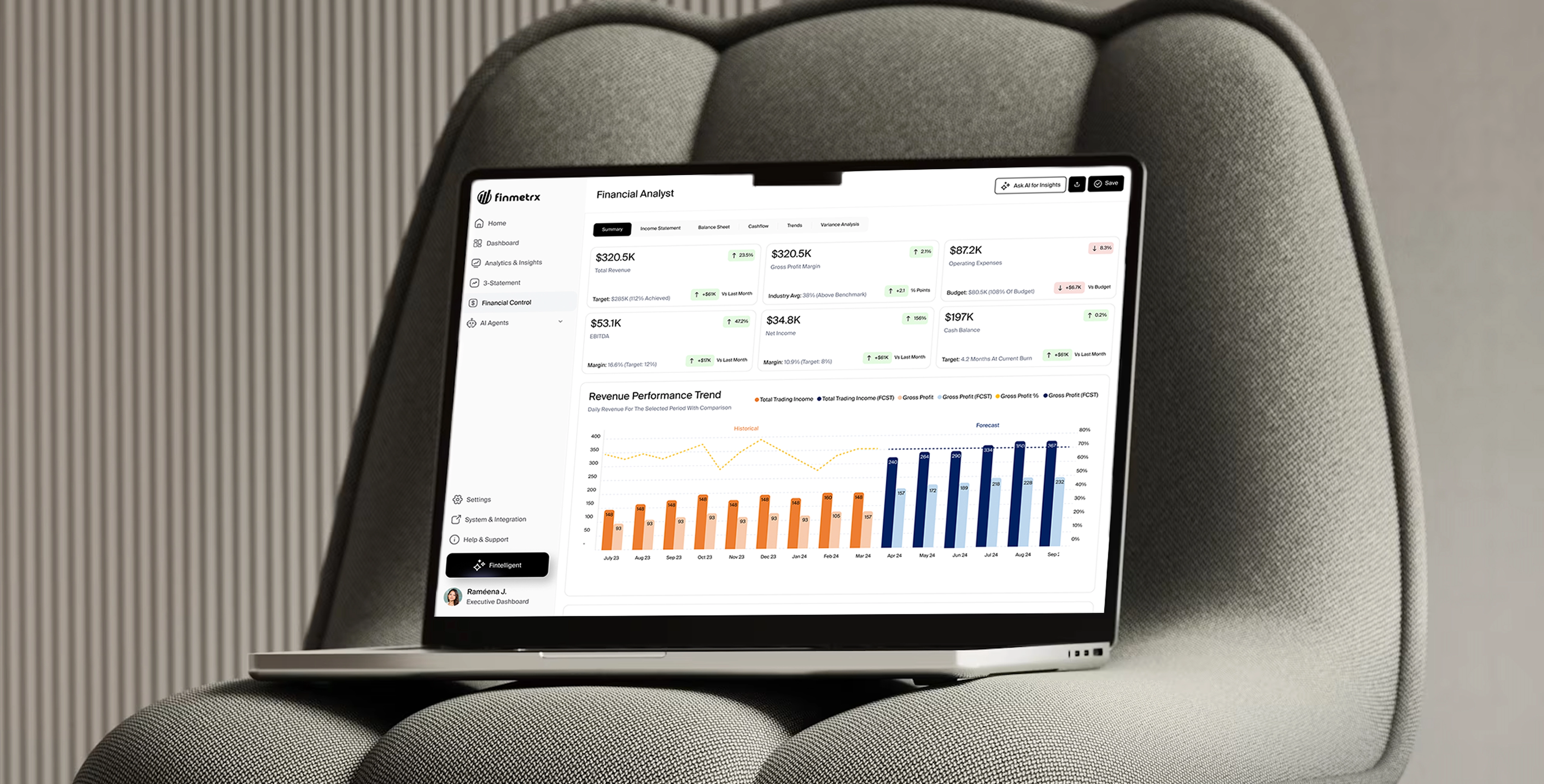
Making AI financial analysis clear enough to trust Finmetrx turns financial data into dashboards and AI analysis that founders and finance teams can act on.
Role
Lead Product Designer (freelance)
Team
Atif Raza founder, Muhammad Junaid COO, M. Ubaid Developer
Scope
0-1 product, AI agents, dashboards, design system
Timeline
Sep 2025 – Feb 2026
Platform
Web app
The problem
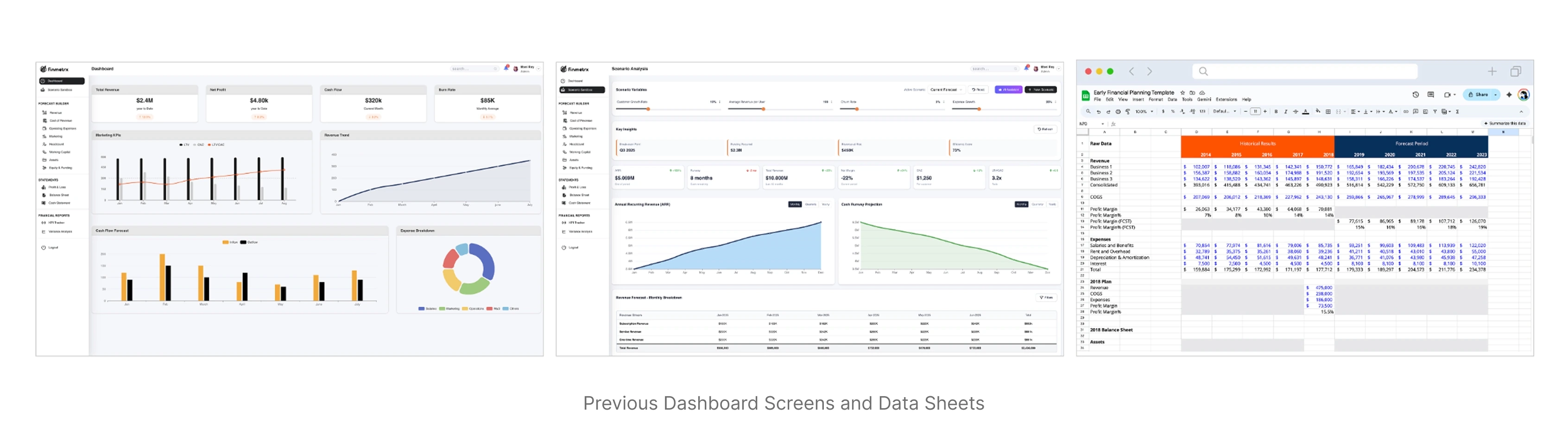
Founders and finance leads had the numbers, but not the meaning. Data sat in spreadsheets, dense tables and separate views, so it was hard to see what had changed, why it mattered, and what needed attention first.
Finmetrx wanted to add AI agents on top. The risk was obvious: more AI could make a confusing product even harder to use.
The design challenge: turn financial data into insight people can act on, and add AI without taking control away from the user.
My role and team
I led product design for the core experience: information architecture, dashboards, data visualisation, AI agent flows and the design system. I worked with Atif, the founder, Junaid (COO) and Ubaid (developer), from first requirements through handoff and design QA.
How I approached it
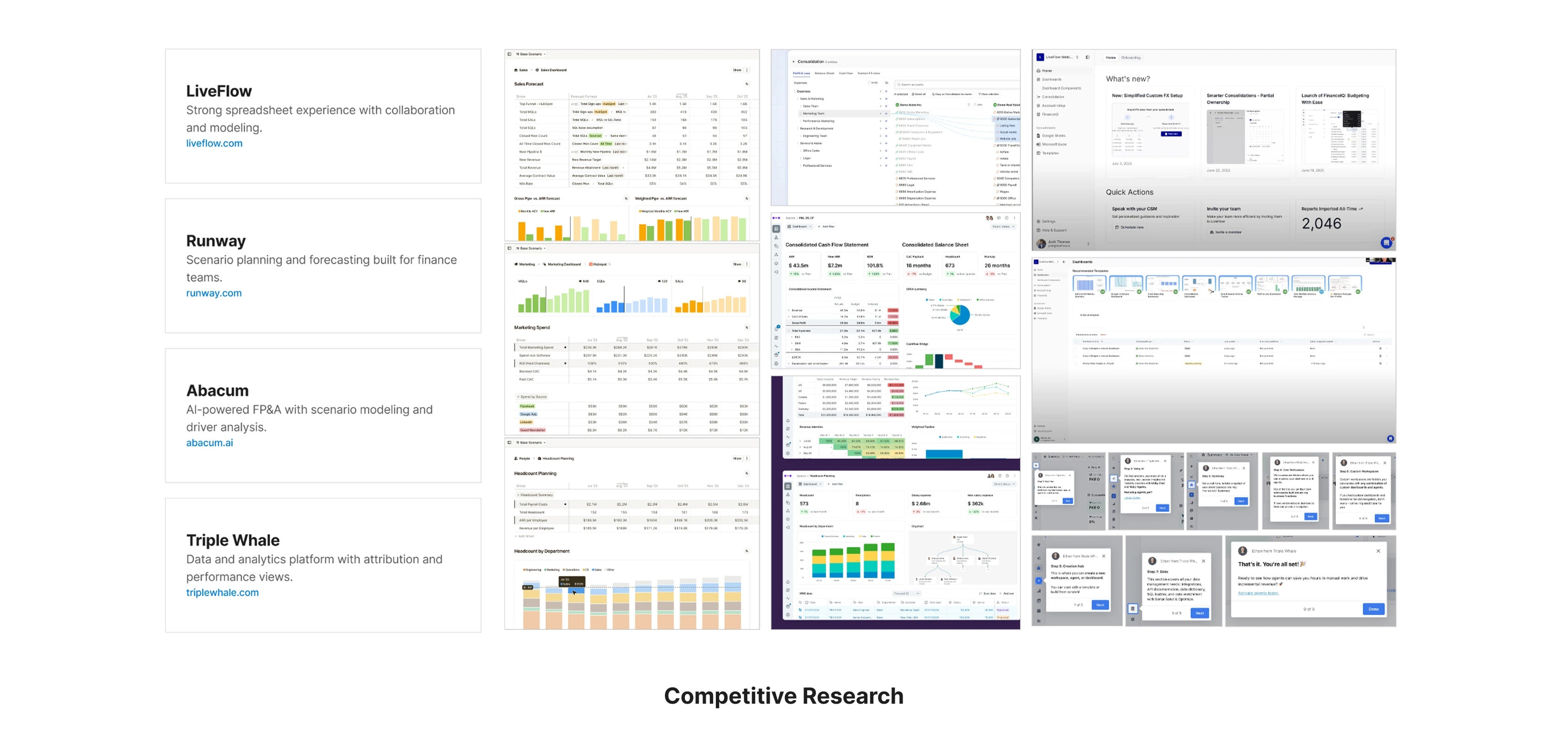
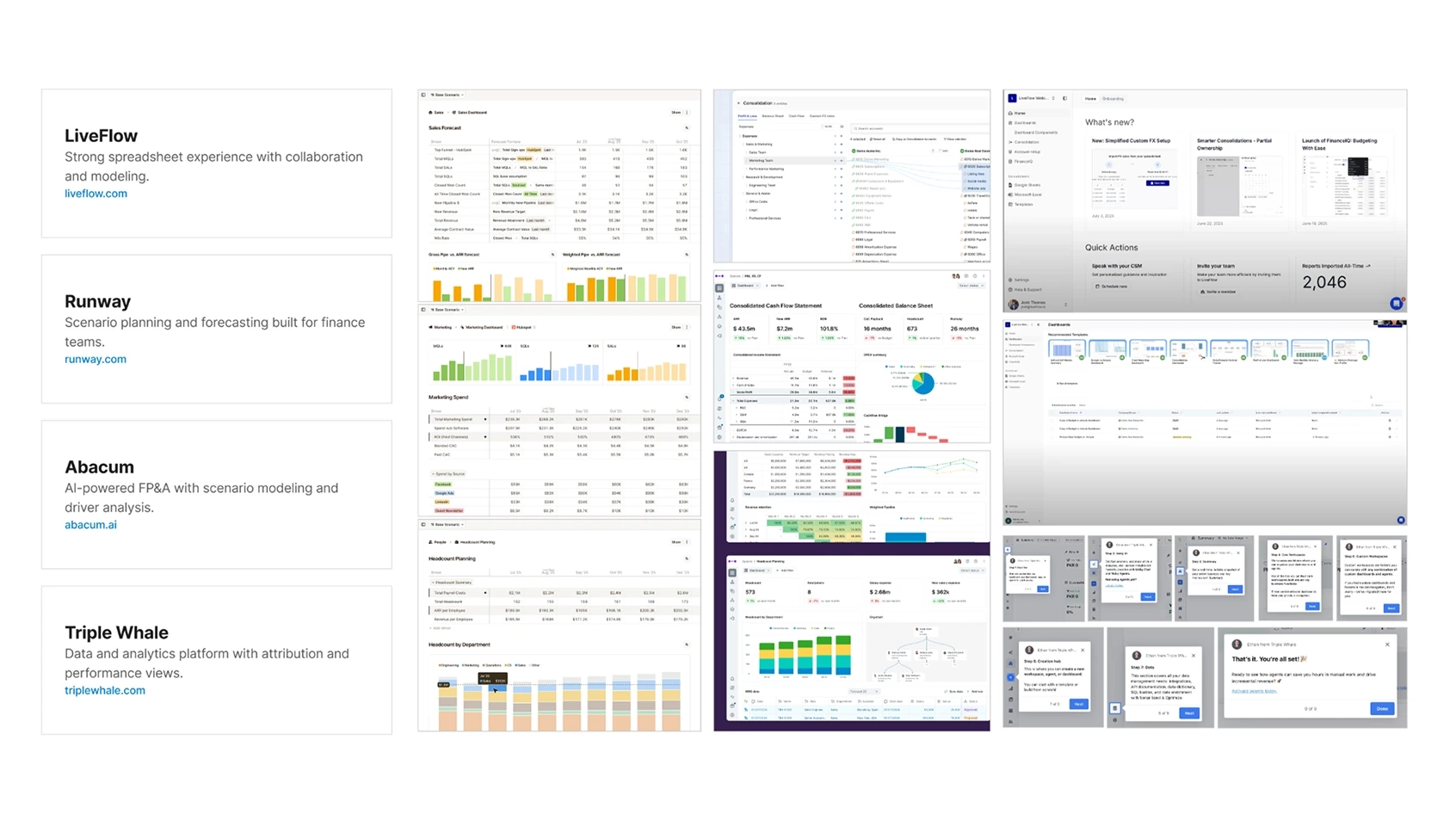
I started with client conversations to understand the users and the business model, then reviewed how mature finance tools (Triple Whale, LiveFlow, Abacum, Runway) handle reporting, dashboards and AI analysis.
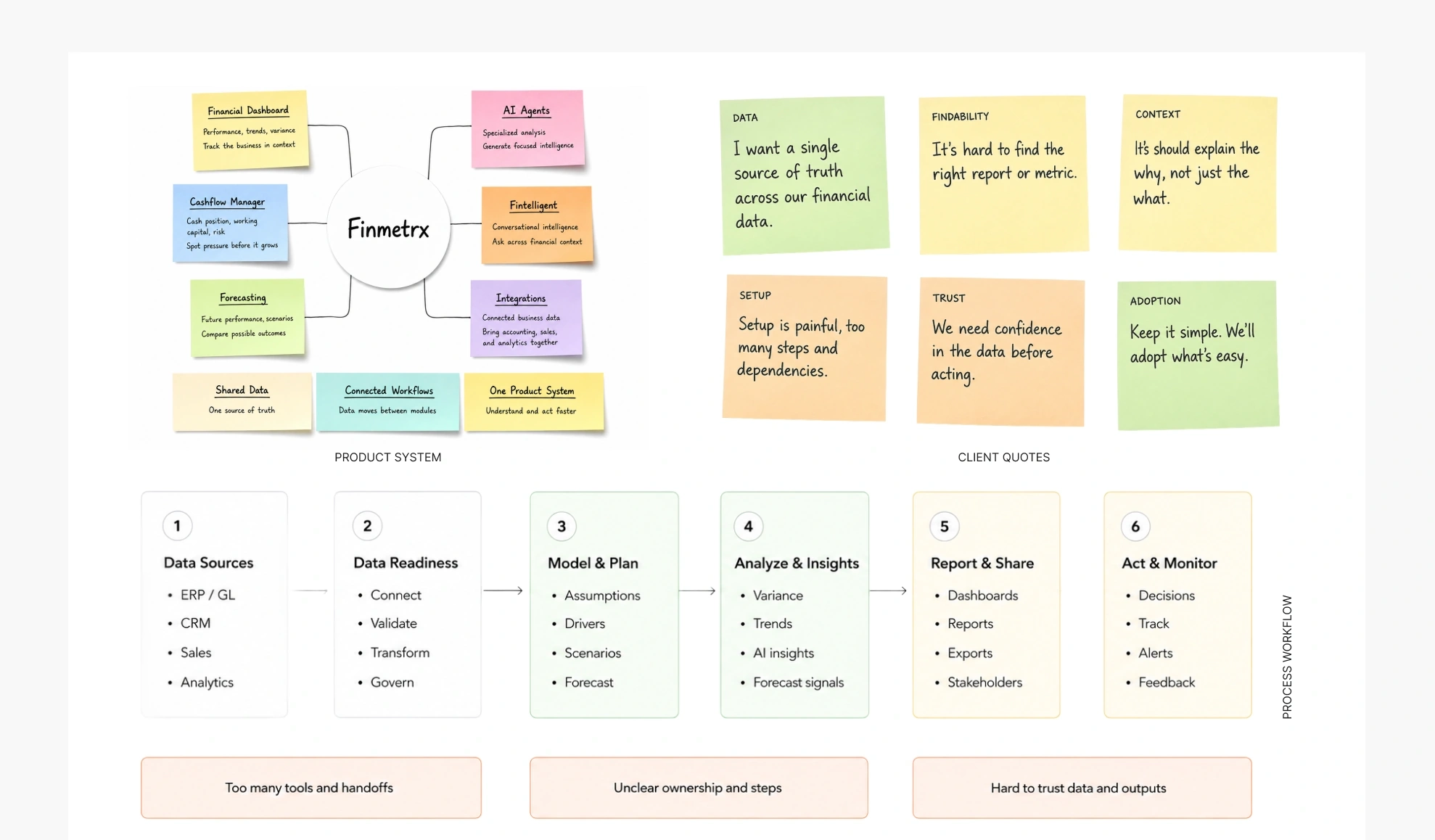
From there I mapped the full product: how data comes in, how it becomes insight, and where AI should help. One rule shaped everything: the financial workflows must work on their own, and AI supports them, not the other way round.
Key decisions
Decision 1: Specialist agents, not one assistant
One general assistant would have to answer everything, and users wouldn't know what it could do. I split AI into specialist agents (analyst, cashflow, sales) grouped by responsibility. Each card shows what the agent does, what data it needs, and how long setup takes.
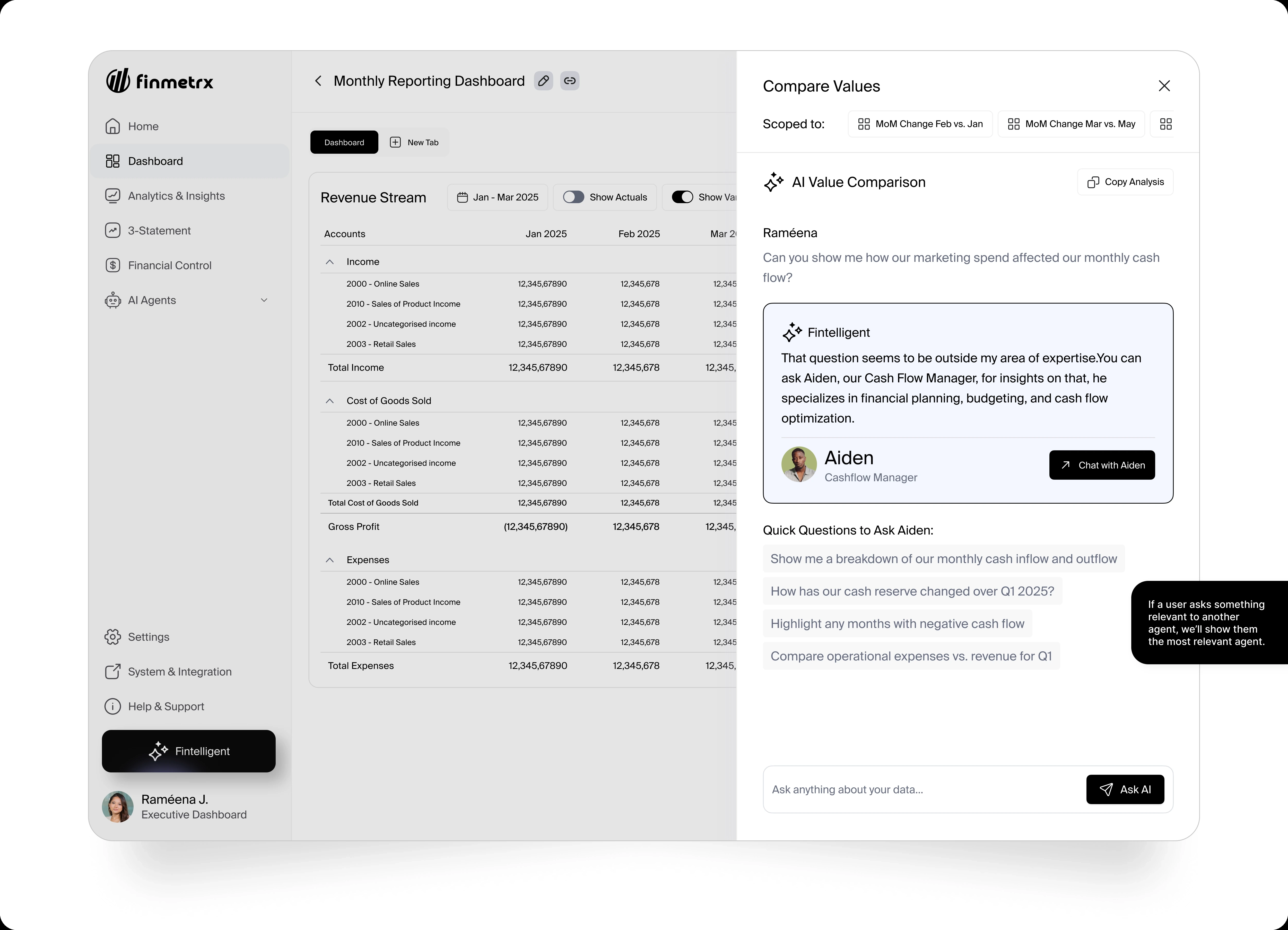
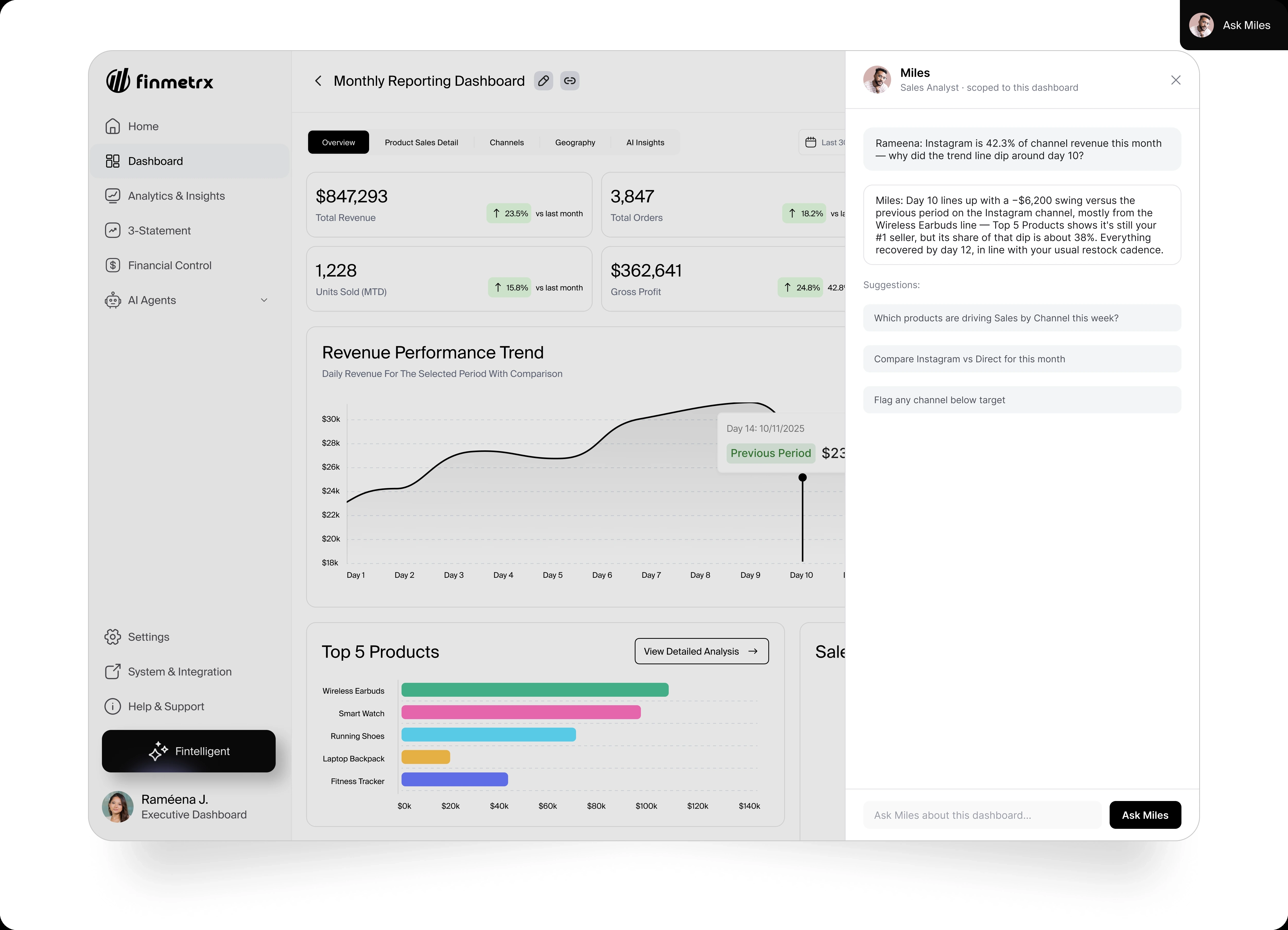
I considered a single chat assistant for everything. It was simpler to build, but a finance lead asking about cashflow would get the same generic answers as someone asking about sales, with no way to see what the AI knew or which data it used. Specialists made the scope visible, so users knew what to ask and could judge the answers. I kept one general layer, Fintelligent, for questions that don't fit a specialist, and it routes people to the right agent.
Decision 2: Show data readiness before setup
AI is only as good as its data. The requirements panel shows what each agent needs, what's already connected and what's missing, so users know the effort up front and trust the output later.
I considered letting users activate an agent straight away and warning them only when data was missing. It felt faster, but it meant people would meet empty or weak results after setup and blame the AI. Showing requirements up front set honest expectations and made the output easier to trust.
Decision 3: Analysis, not authority
In finance, AI shouldn't make decisions. Agents analyse, find patterns and suggest next steps, but the user stays in control of every financial action.
I considered letting agents act on their own once they found something, for example updating forecasts automatically. With financial data, one wrong automatic action costs more than the time it saves. Keeping people in charge of every action kept the AI useful without making it risky.
Decision 4: Make AI progress visible
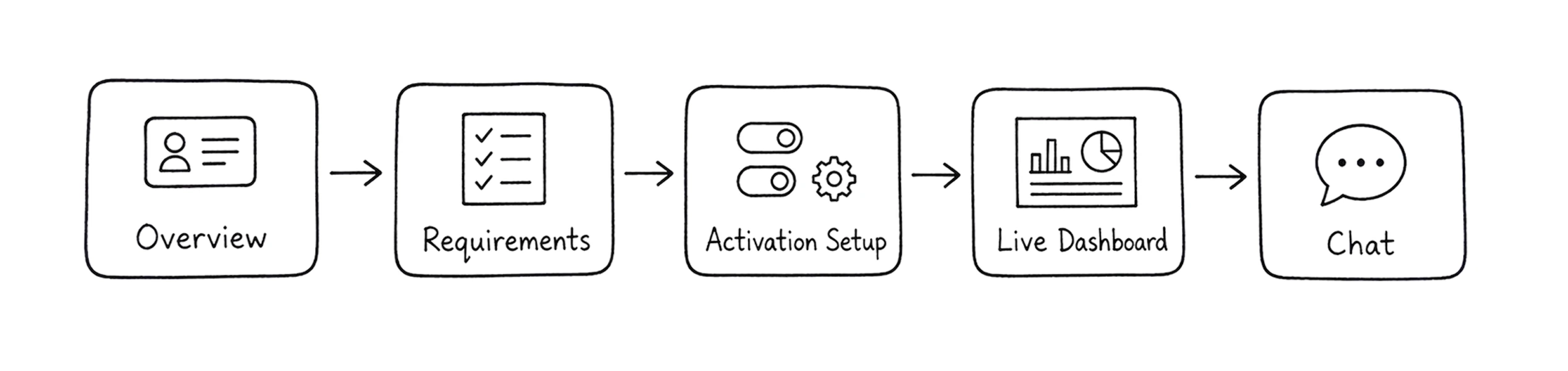
A spinner doesn't build trust. The progress screen shows what the agent is doing (checking data, running analysis, preparing results), so the wait makes sense.
I considered a standard loading spinner. It works for a two-second wait, but agent analysis takes longer, and a spinner gives no sign of what's happening or whether it's stuck. Showing each step turned the wait into proof that the agent was checking the right data.
Decision 5: Turn risk into action
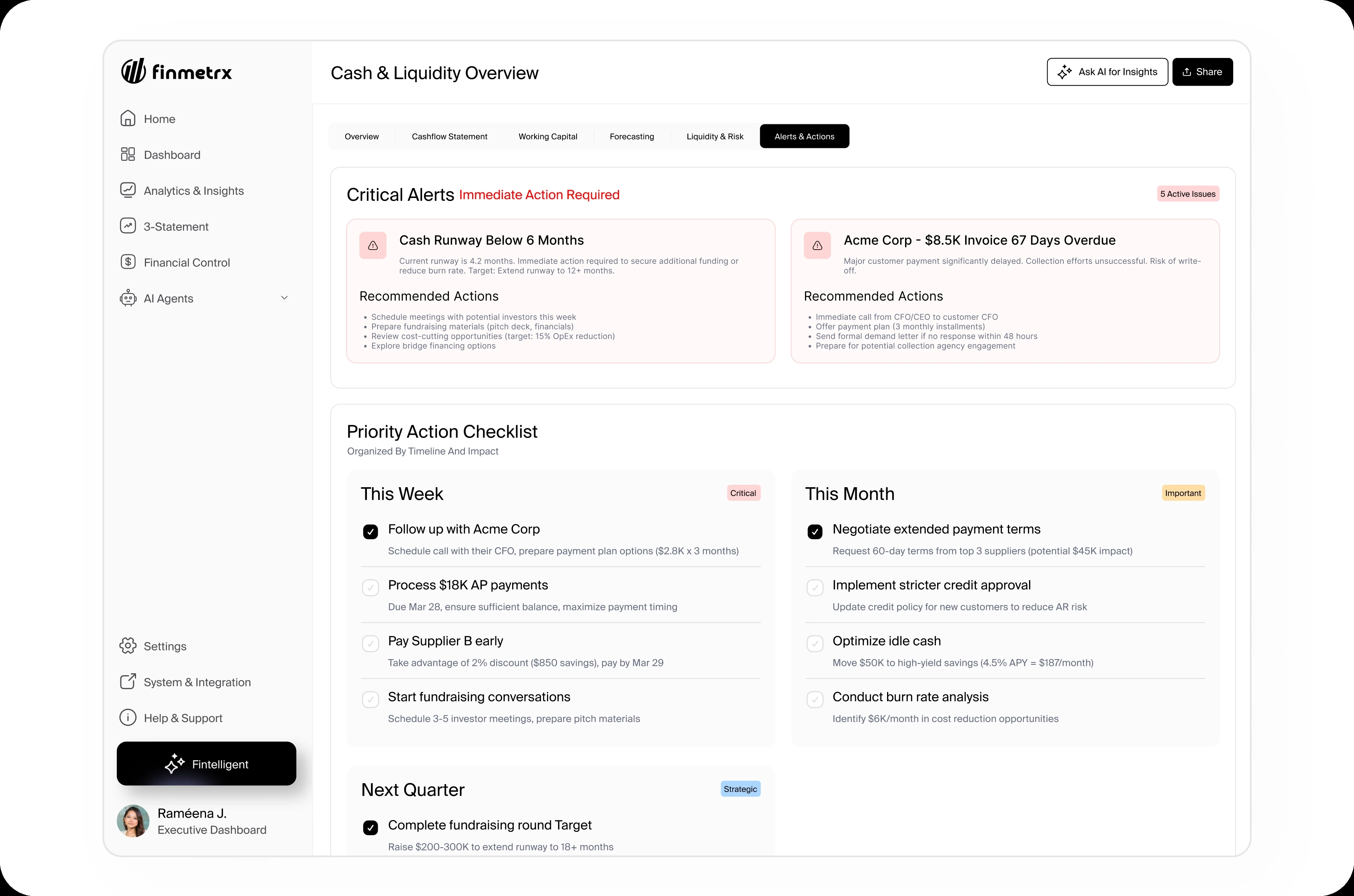
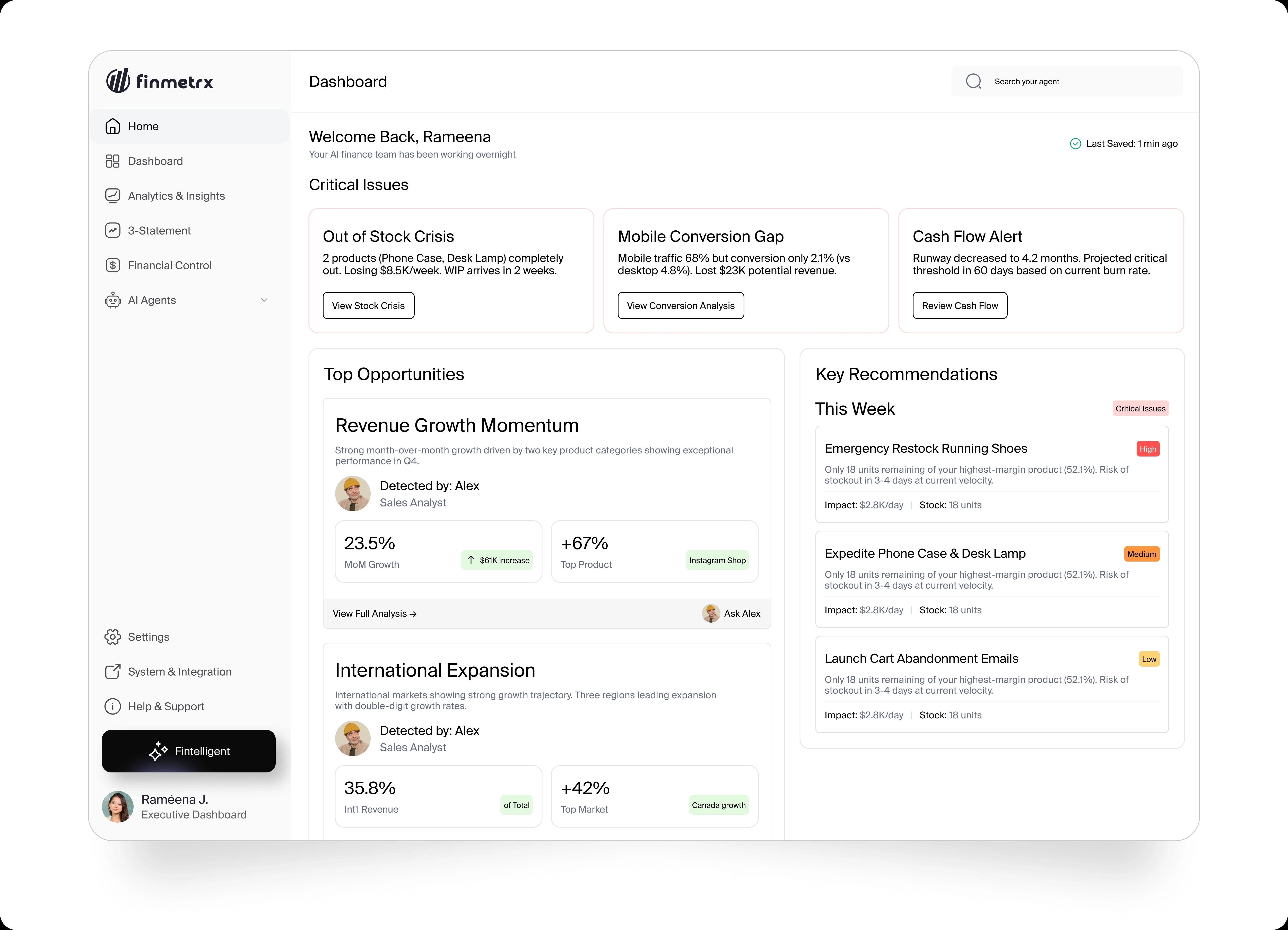
A cashflow alert that only says "something is wrong" isn't useful. Each alert shows the signal, how serious it is, the financial impact and a recommended next step.
I considered simple red and amber warning badges. They show that something is wrong, but not how much it costs or what to do next, so users would still have to investigate on their own. Adding impact and a recommended action made each alert something people could act on.
The product
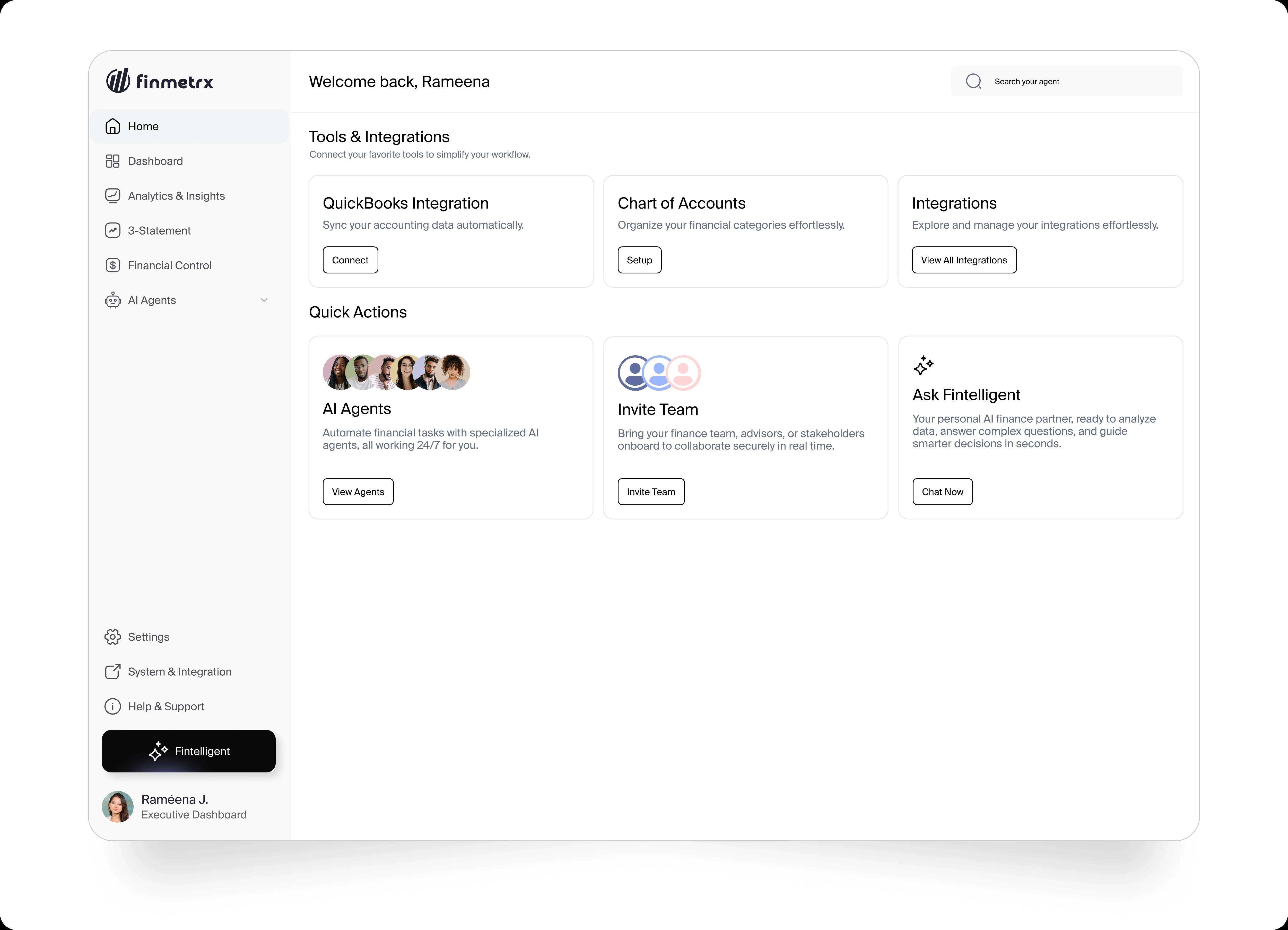
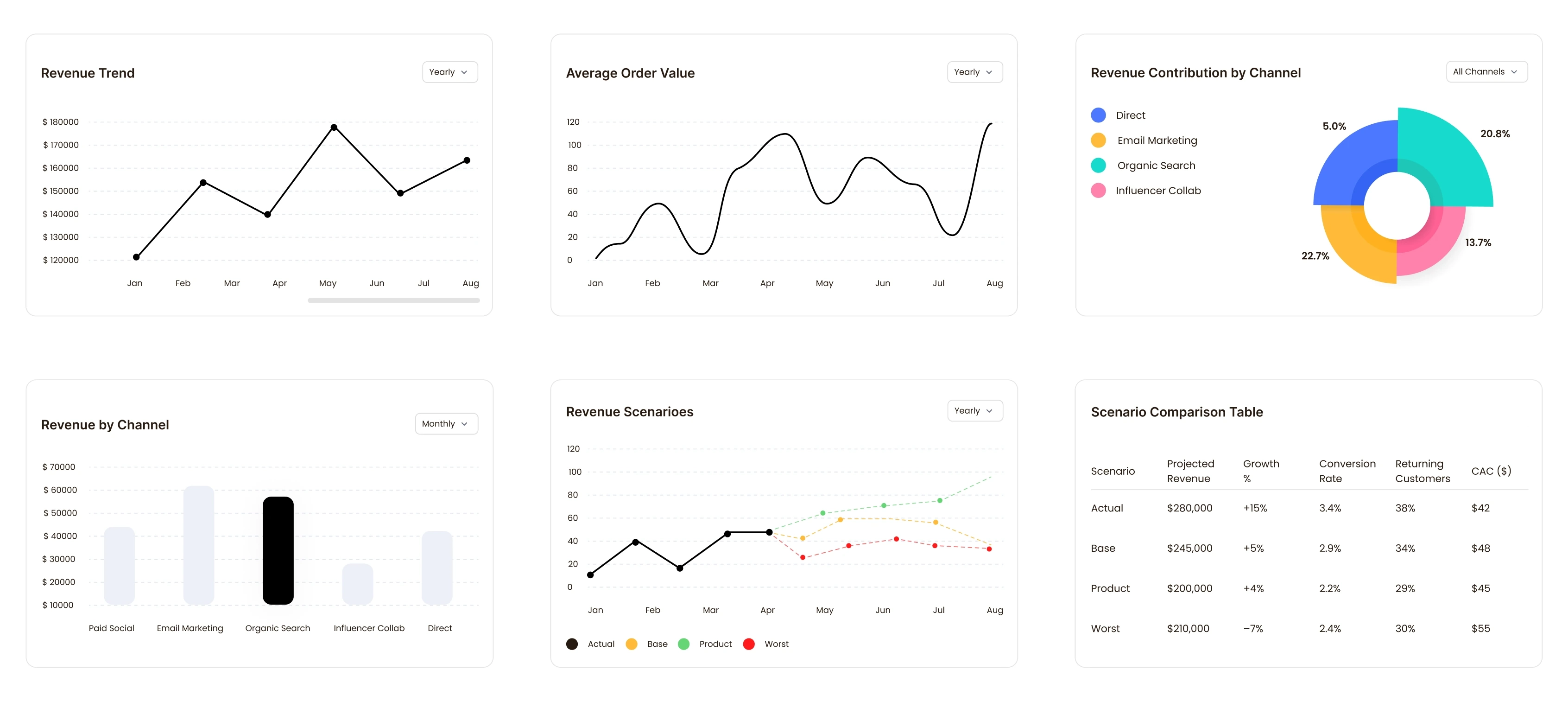
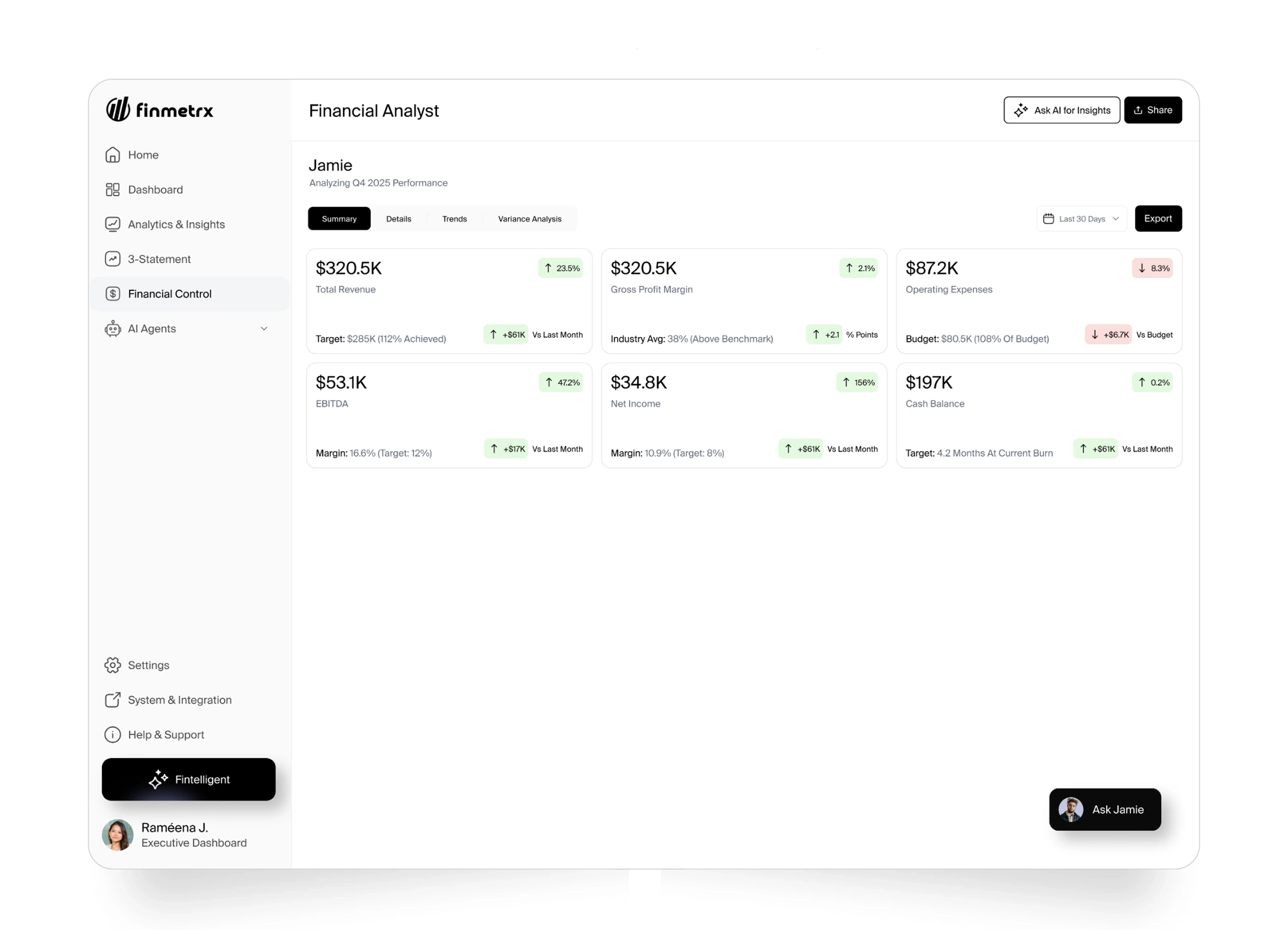
1 / 14
Design system
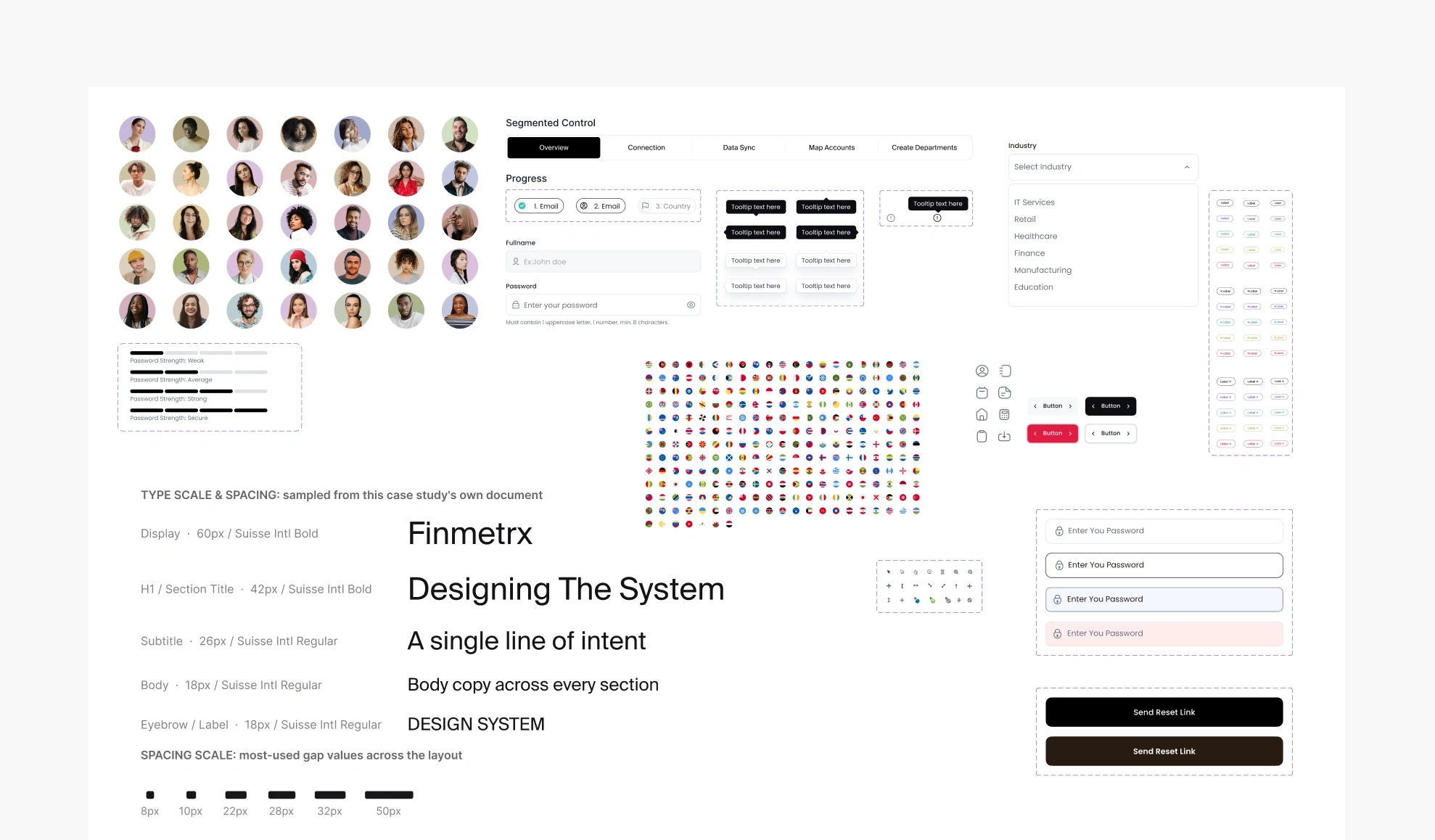
One system had to support dense tables, guided AI setup, dashboards, alerts and chat. I defined type, spacing, controls, states and components, including empty, loading and error states, auth and settings, so new features stayed consistent.
Outcome
By the end of my engagement in Feb 2026, the core experience, agent flows and design system were designed and handed over to the development team.
Reflection
Finmetrx changed how I think about AI in complex products. The hard part isn't the chat, it's deciding what the system needs to know, making that visible, and giving users control before automation begins.