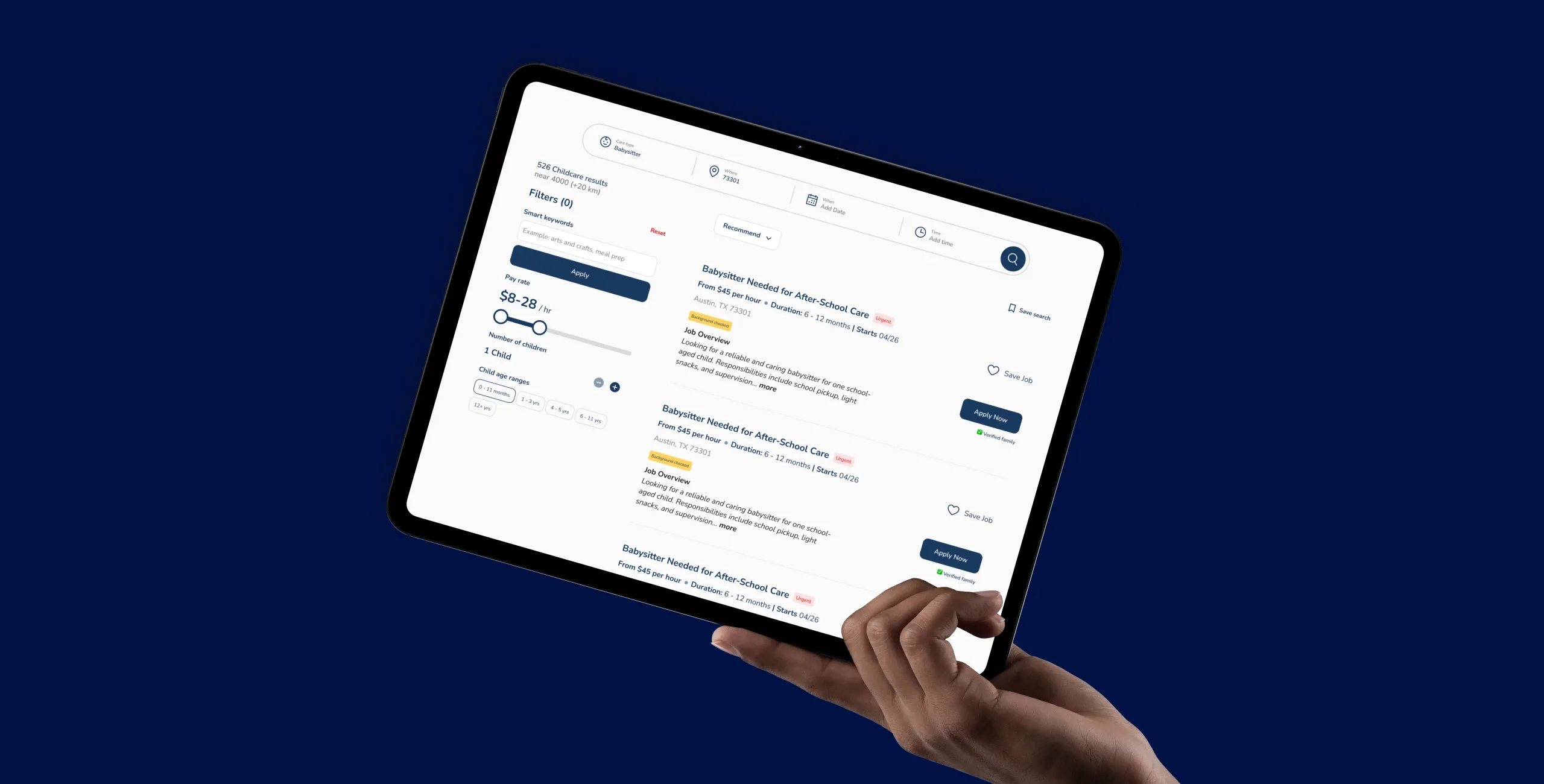
Trusted Care Marketplace Platform
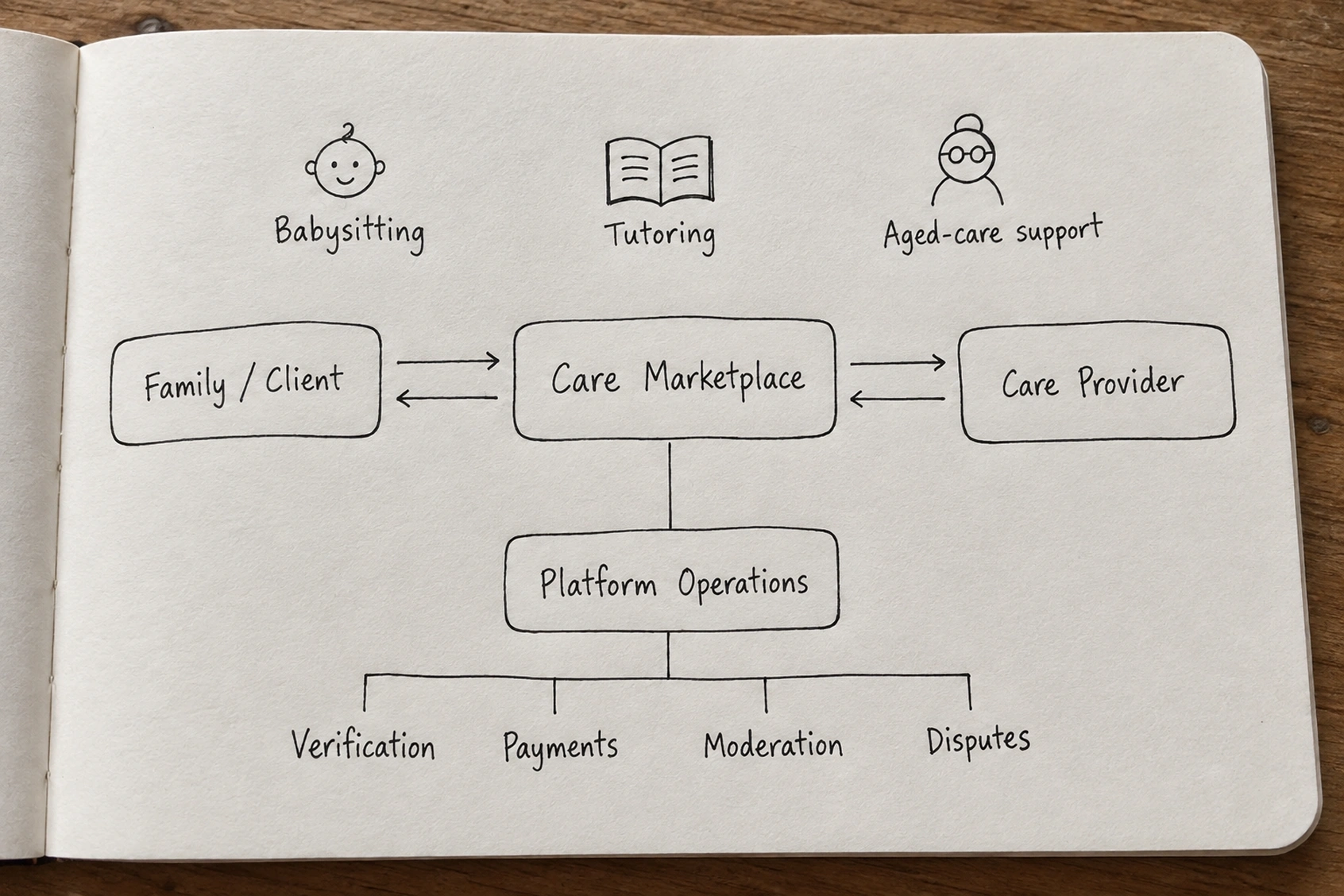
Building trust into a care marketplace, then improving it live MashCare connects Melbourne families with verified babysitters, tutors and aged-care support workers. I designed the whole v1 product in 32 days. Now I'm designing the next build: a proper in-app conversation module to replace the form-and-email handoff.
Role
Product Designer · Pixelz360 client project
Timeline
v1: live in 2026 · v2: in development
Platform
Responsive web
Team
Client, Sales person, Project coordinator from dev team and me.
Scope
Research, architecture, both dashboards, website, verification, testing, design QA
V1: Building the marketplace from zero
The problem
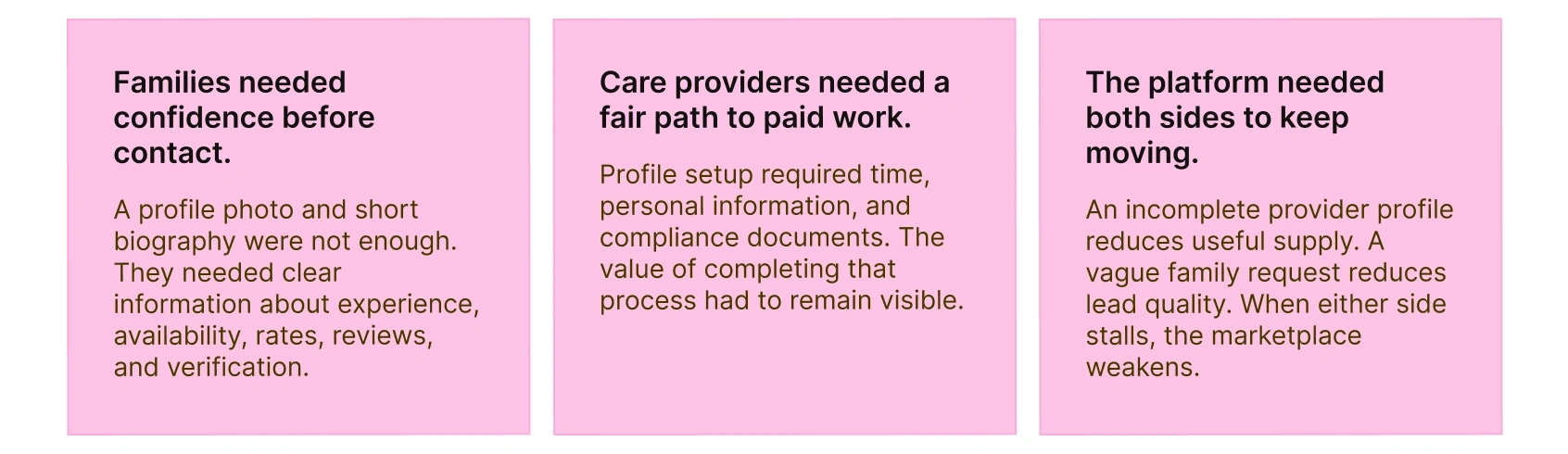
Families were being asked to let a stranger into their home: to look after their children, tutor them, or support an older parent. A photo and a short bio aren't enough for that. On the other side, care providers had to hand over documents and time before earning anything. If either side stalls, the marketplace has no supply or no demand.
My role and team
I designed v1 end to end in 32 days: research, product architecture, both dashboards, the website, verification, usability testing and design QA. I worked with Sales Person, Client, Project Coordinator from dev team.
What the research showed
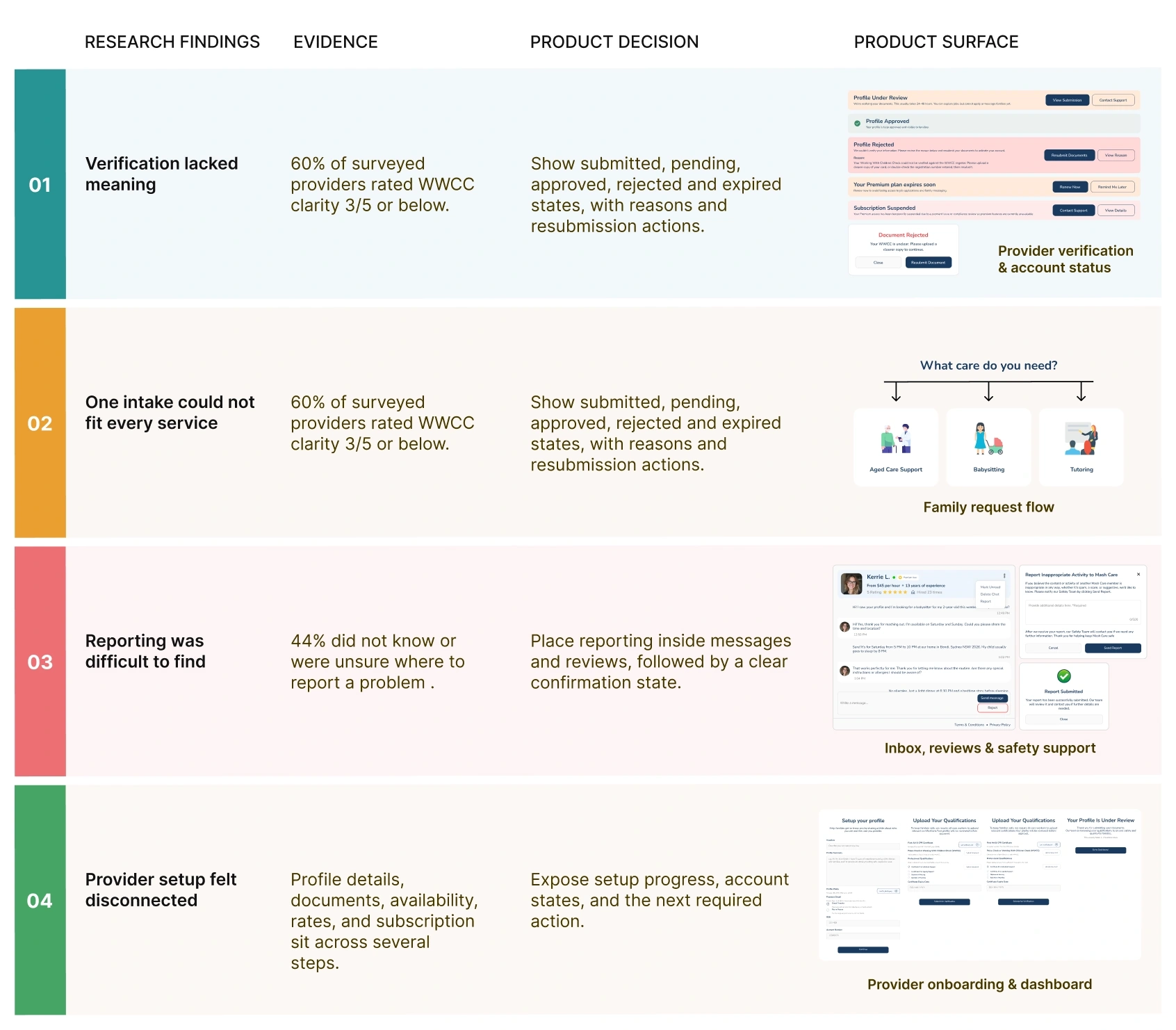
I ran desk research, competitor reviews, interviews, a survey (52 valid responses) and usability tests. Four findings shaped the product:
| Finding | Evidence | What we did |
|---|---|---|
| Families check trust before they contact anyone | Interviews | Verification, experience, rates and reviews shown before contact |
| A "verified" badge alone doesn't explain anything | Usability tests | Verification shown as states: pending, approved, rejected, expired |
| People don't know where to report a problem | 44% of survey respondents weren't sure | Reporting placed where problems happen, with a confirmation |
| Provider setup felt long and unclear | Usability tests | Setup broken into stages with visible progress |
How it fits together
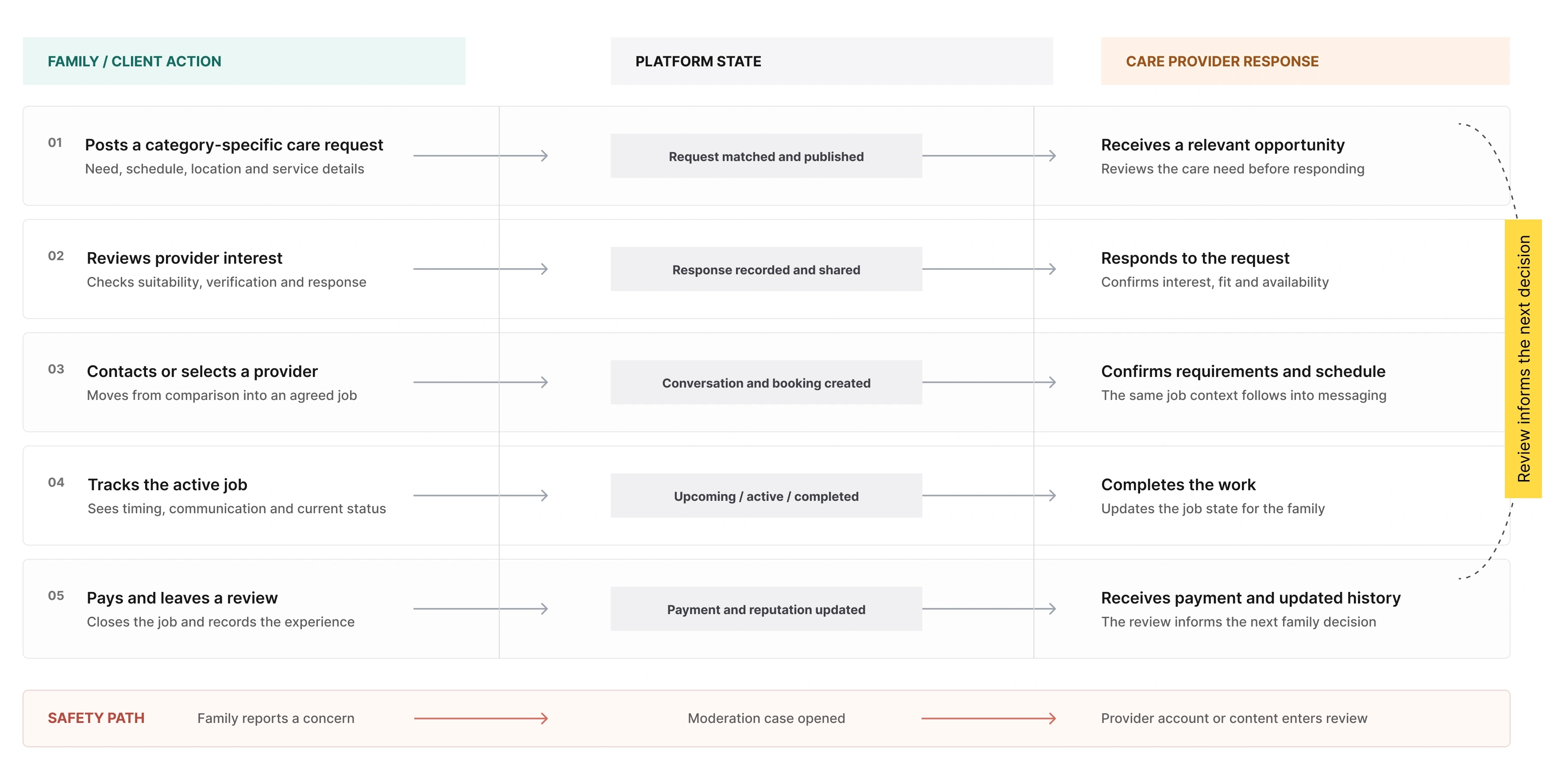
Three connected parts: the public website, the family workspace and the care provider workspace, sharing login, notifications, payments, reviews and reporting. A family request becomes a provider opportunity; a completed job becomes a payment and a review that helps the next family decide.
Key decisions
Decision 1: Different questions for each type of care
A tutoring request needs subject and year level; babysitting needs children's ages and routine; aged care needs clear non-clinical boundaries. Each request starts with the category, then asks only what that category needs.
I considered one shared request form. It was simpler to build, but providers would get vague requests and have to ask follow-up questions, so the questions change with the category.
1 / 3
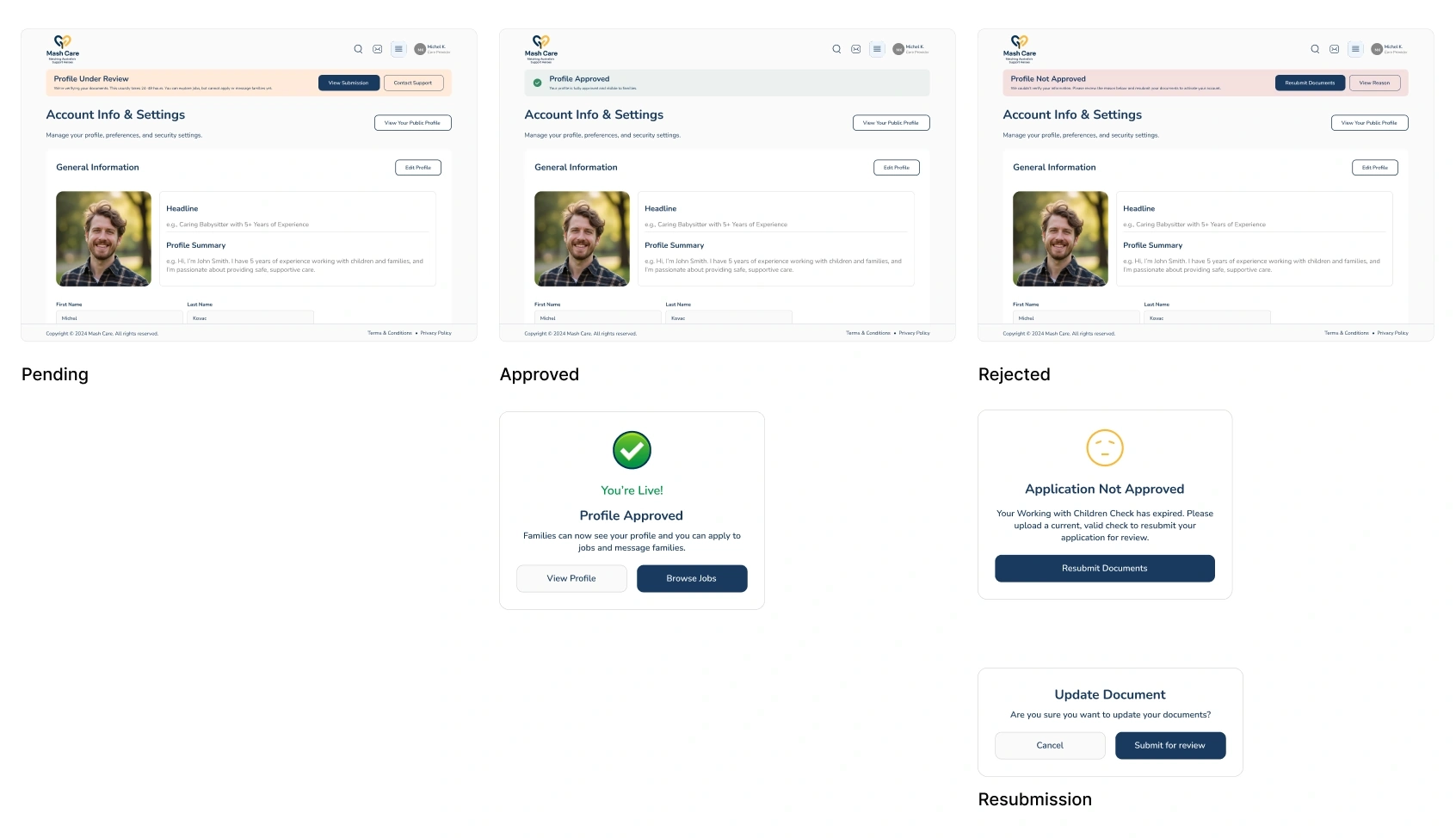
Decision 2: Verification as states, not a badge
Providers see exactly which documents are needed, what's under review, what was approved, why something was rejected and when a document expires. Families see what was actually checked.
I considered a single "verified" badge. Testing showed people didn't know what it meant, so each check got its own visible state.
Decision 3: Reporting where problems happen
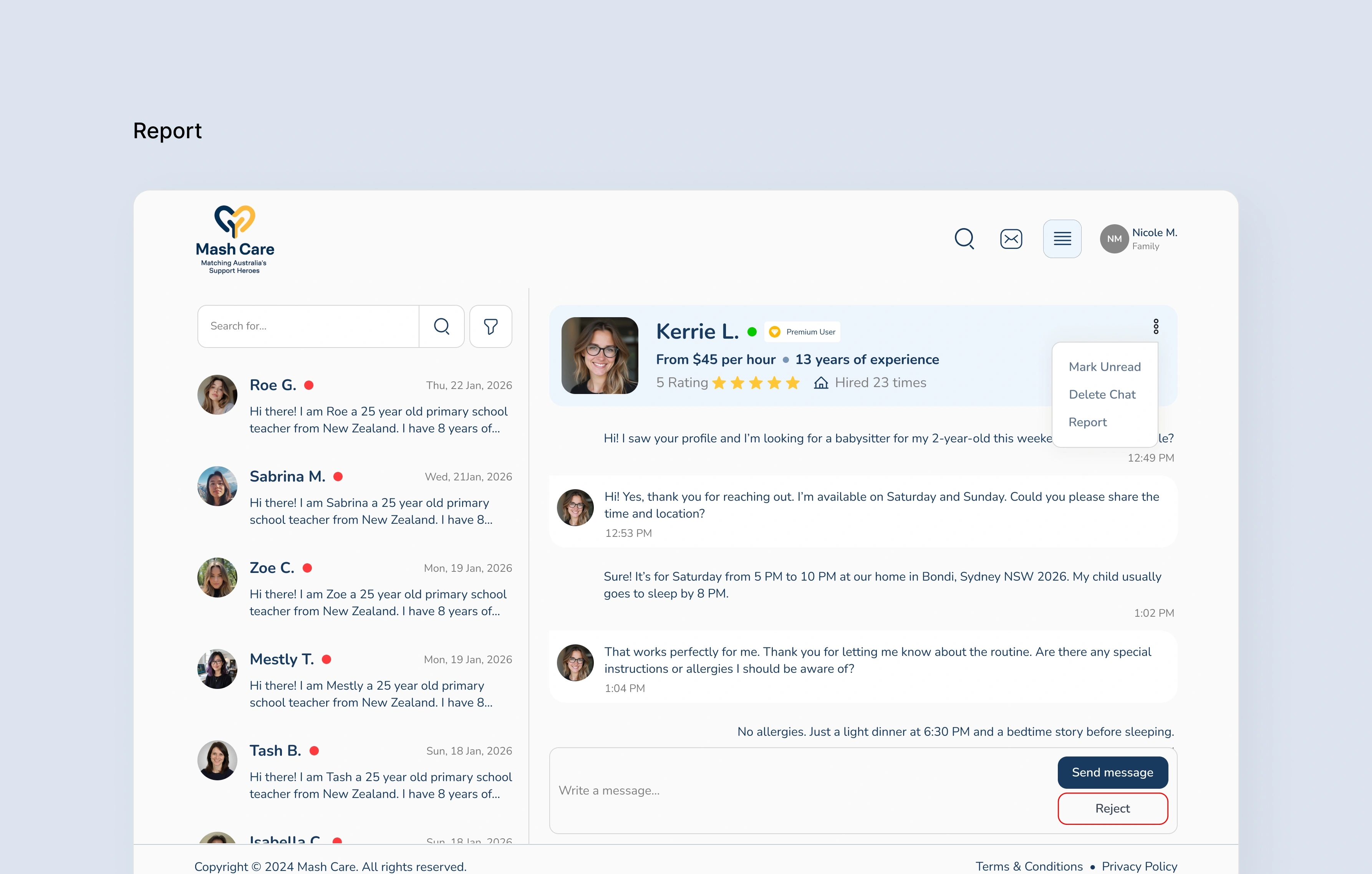
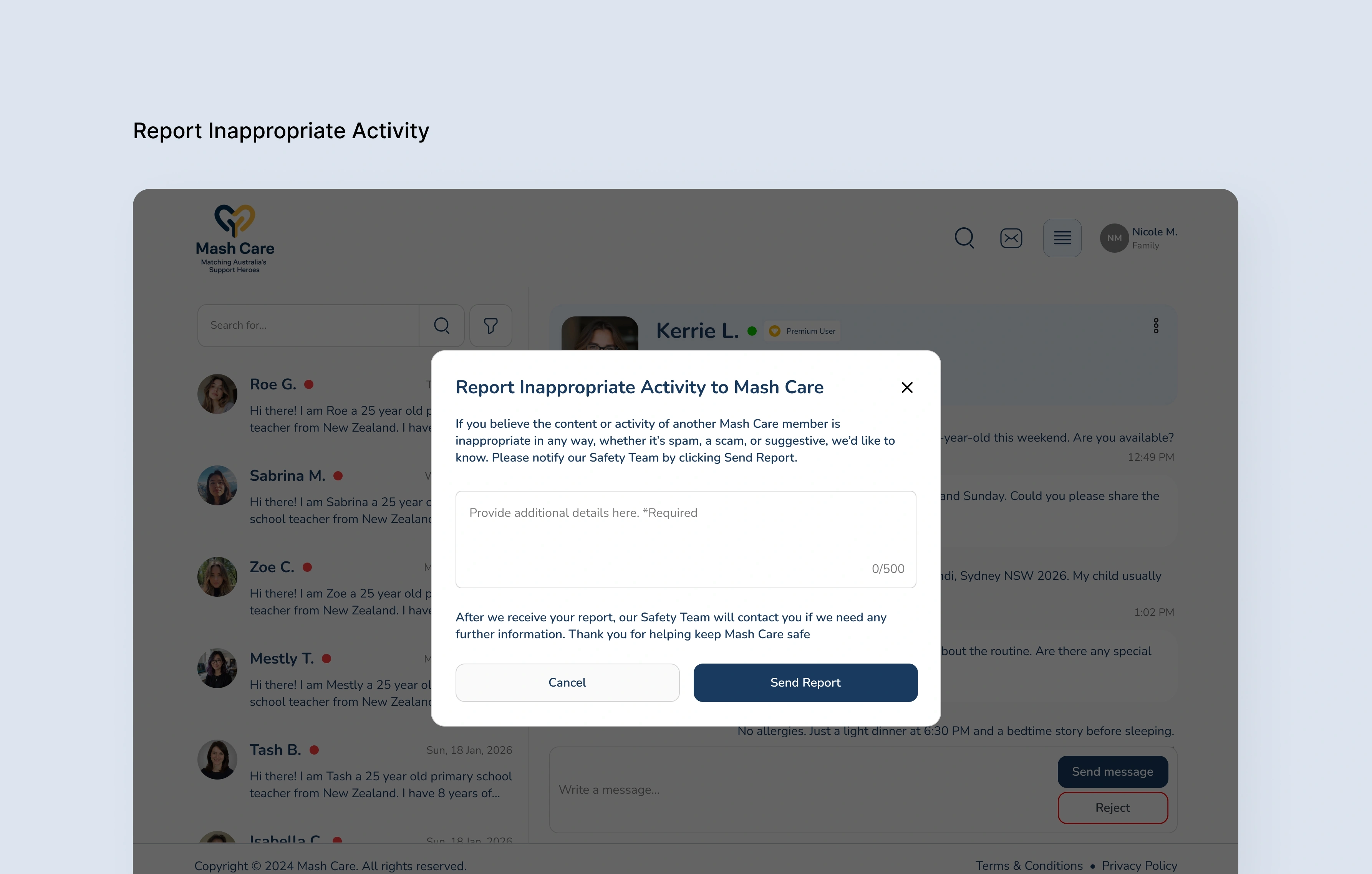
44% of survey respondents didn't know or weren't sure where to report a problem. Reporting moved next to reviews and job activity, with a clear confirmation after sending.
I considered a report link in the help section or footer, like most sites. The survey showed that's exactly where people don't look.
1 / 2
Decision 4: Provider setup in stages, with progress
Profile, service details, documents, rates and availability are broken into clear stages, each specific to the provider's service. Progress stays visible so providers know what's left and why it matters.
I considered one long setup form. Testing showed providers lost track of what was left, so it became stages.
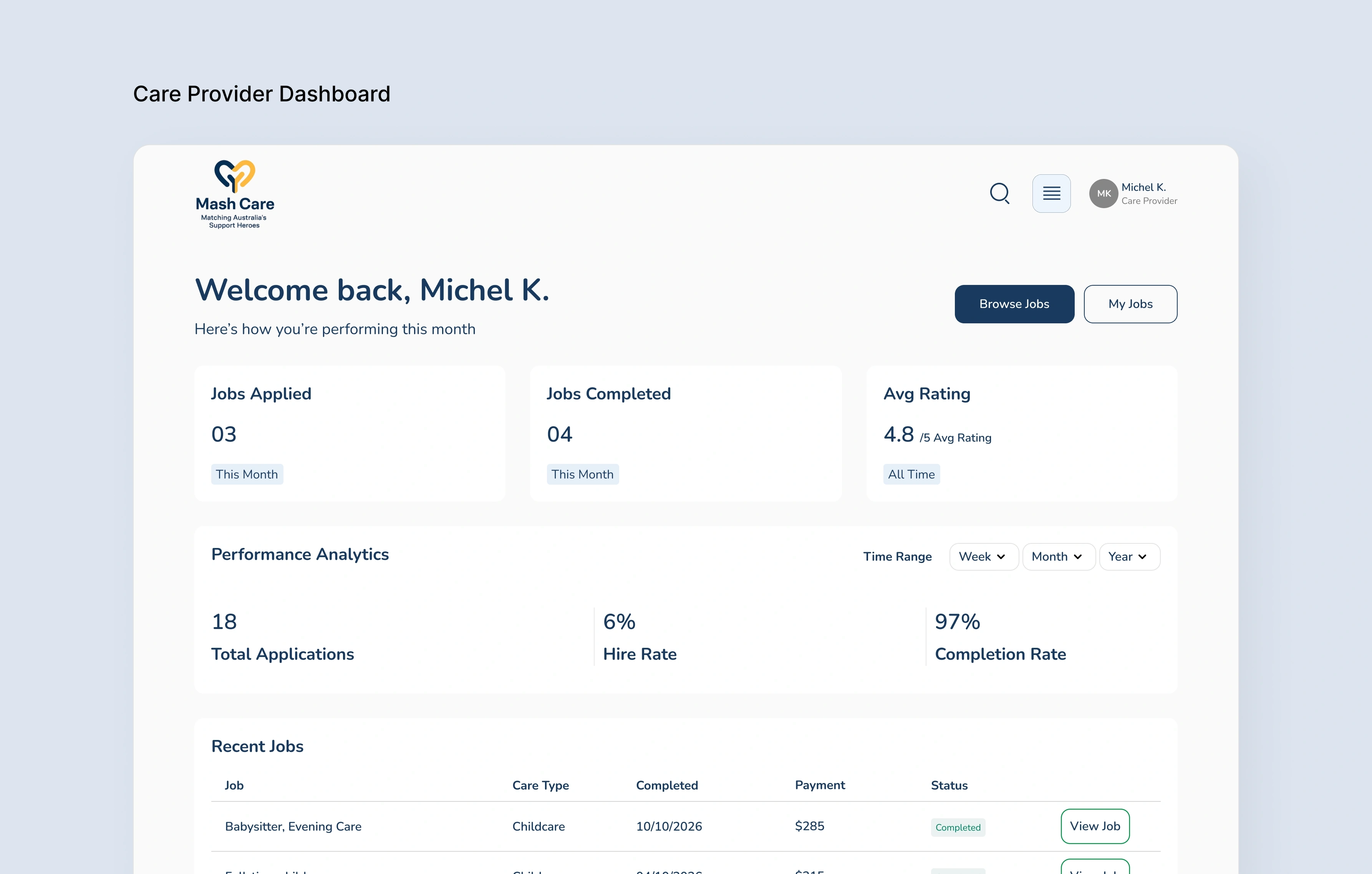
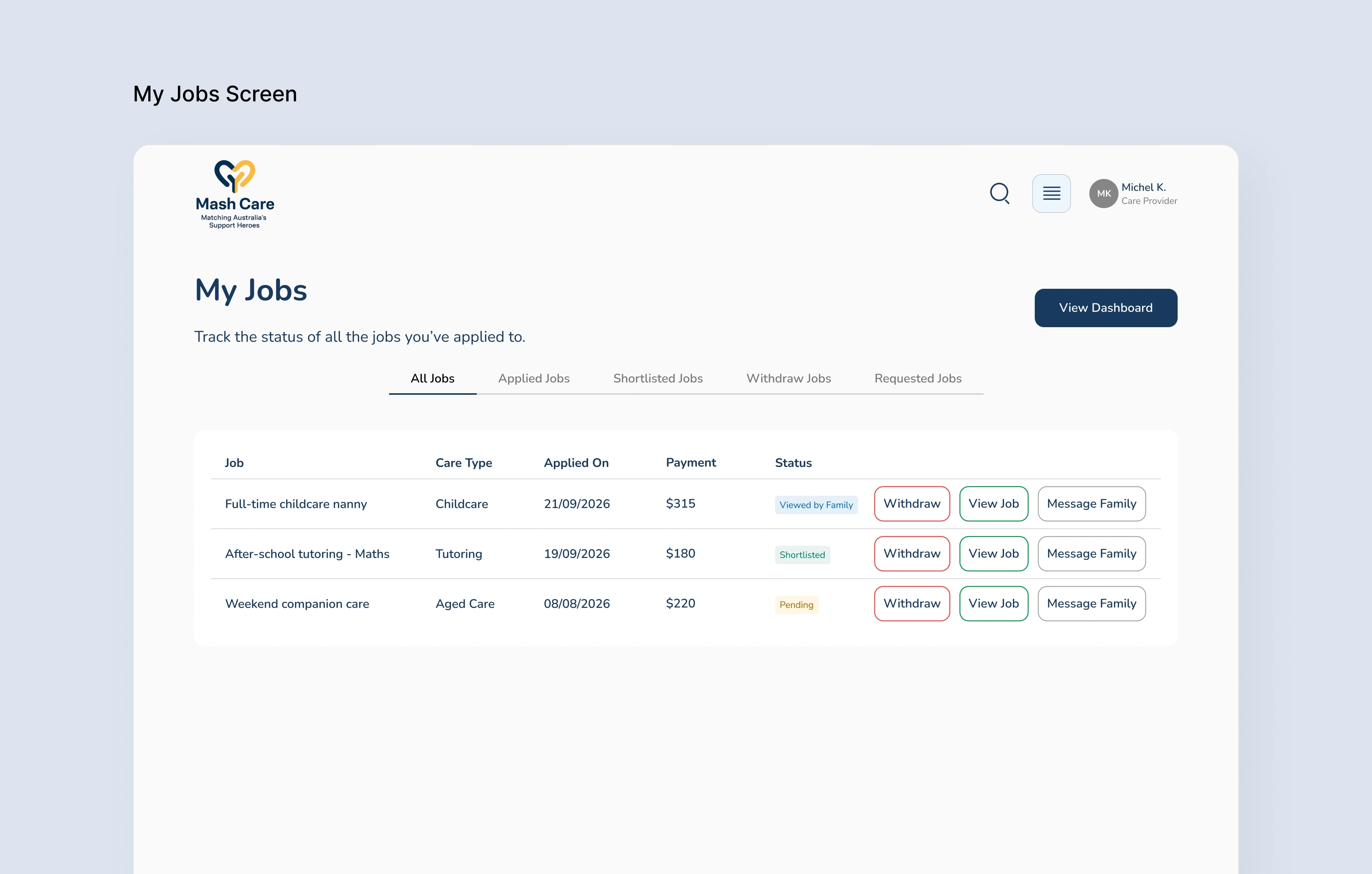
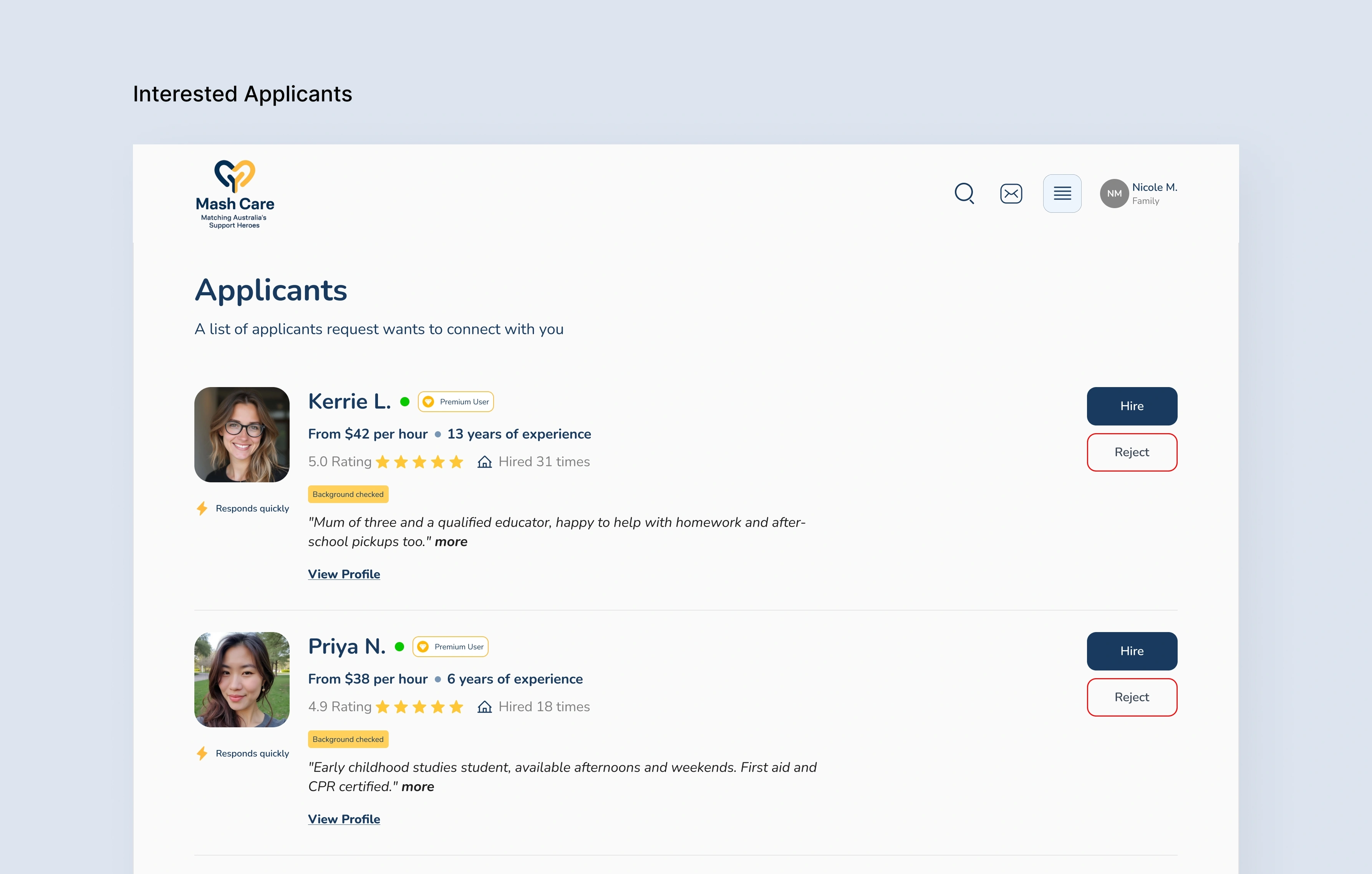
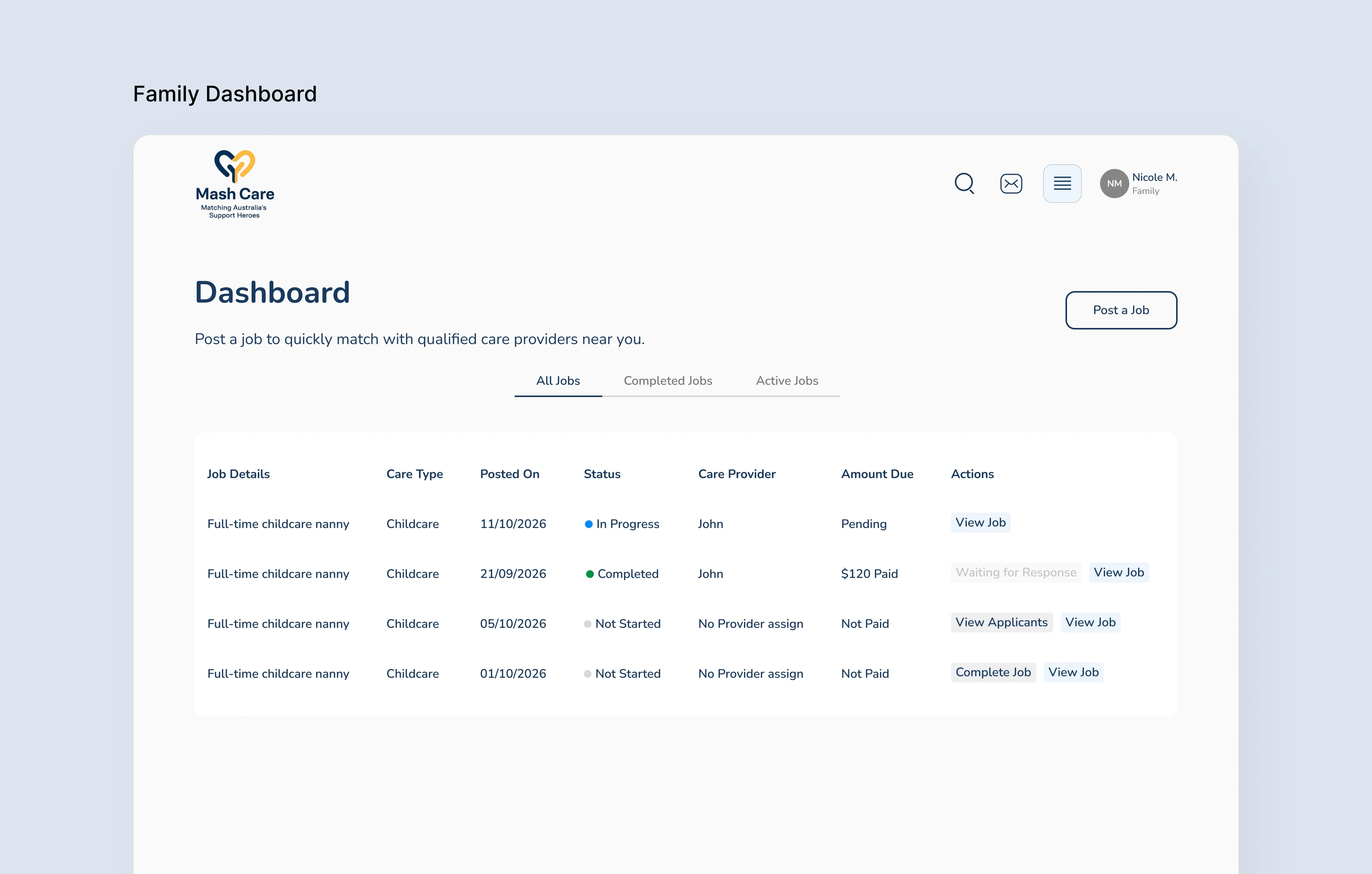
Decision 5: Clear job status on both sides
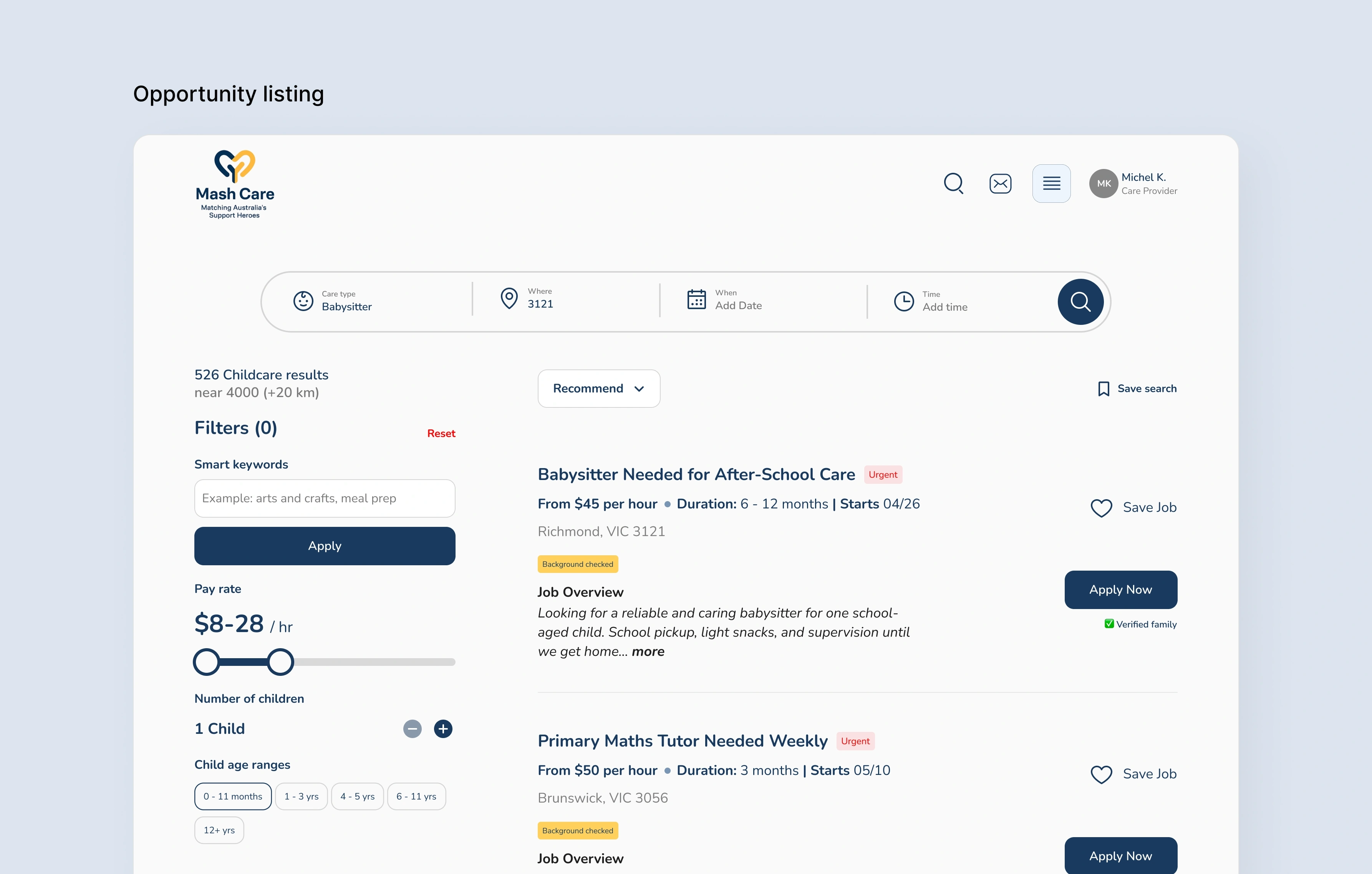
Families see upcoming jobs, completed jobs and payments due. Providers see new opportunities, active jobs and completed work. Each stage shows the one action that matters, so leads don't quietly expire.
1 / 3
1 / 2
V2: improving the live product
What we saw after launch
In v1, a family filled in a form, and the conversation then moved to email or phone, outside MashCare. Once that happened, the platform lost sight of the job, and four problems followed:
- Leads went unanswered. Some family requests never got a reply, and nobody could see it.
- Agreements got lost. Timing, rates and requirements were agreed in emails and calls, so neither side had one clear record.
- Reports had no context. When something went wrong, the MashCare team couldn't see the conversation, so problems were hard to act on.
- Users left the platform. Families and providers kept dealing directly, so jobs and payments moved outside MashCare.
The MashCare team raised this, and families and providers complained about it too. The marketplace was working at the start of each job, but losing it in the middle.
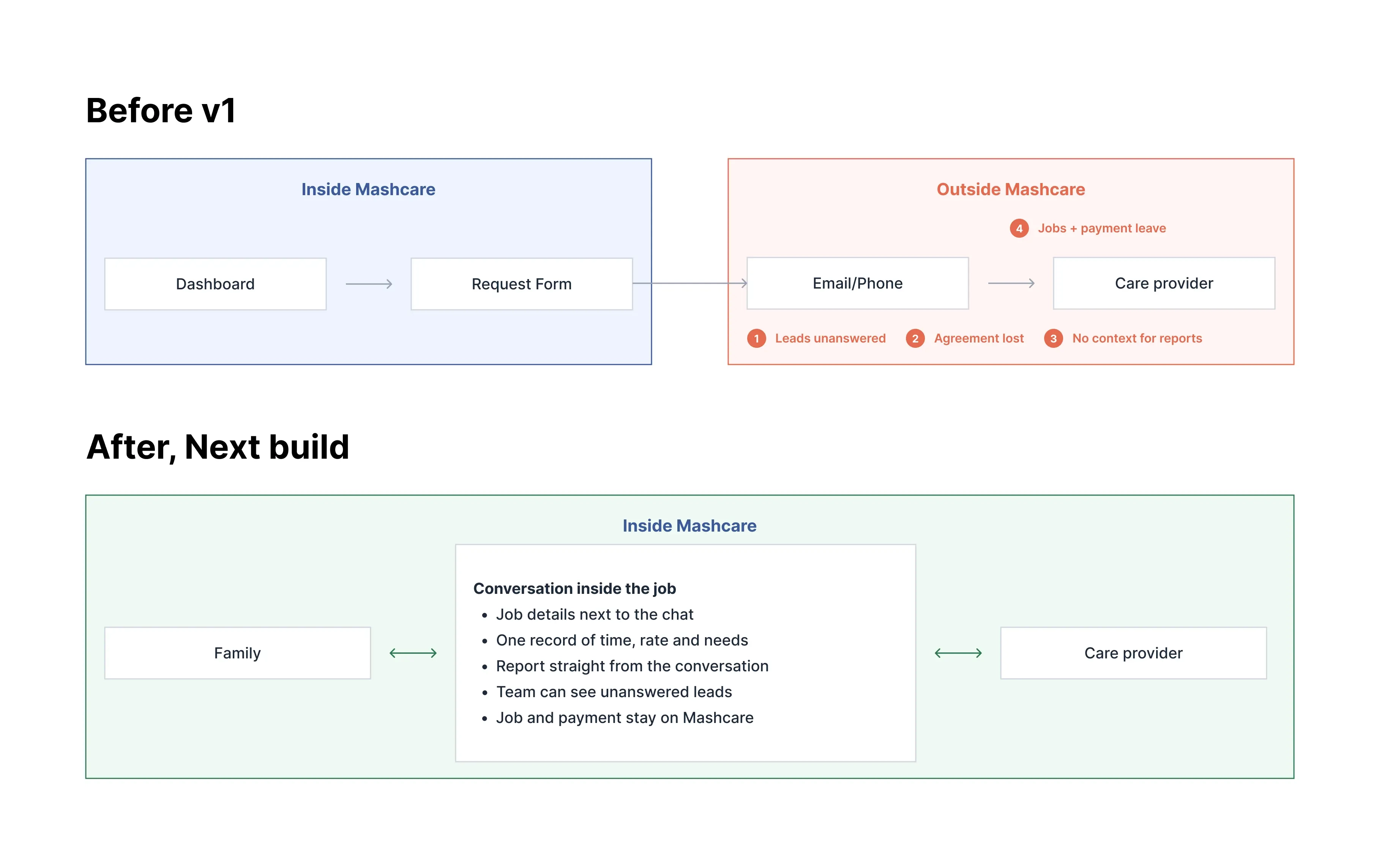
The v2 solution: a conversation module attached to the job
Messages now sit inside each job, with the provider and job details next to the conversation. Families and providers can confirm timing and requirements, and both keep a record of what was agreed. Reporting is available in the same place if a conversation becomes inappropriate or unsafe, which also builds on the 44% finding from v1.
Testing so far
The conversation module is now in development. Before handoff, I walked the team through the main scenarios: a family asking a provider a question, both sides agreeing on time and rate, and reporting a conversation that goes wrong. This helped us check that each step was clear and that nothing important happened outside the job. Once it's live, I'll test it with real families and care providers and improve it from what they do.
Website and UI system
Each service has its own landing page, because families search for a tutor differently from aged-care support. One component and state system (verification, job, message and payment states) works across the website and both dashboards.
Outcome
v1 is live in Melbourne with three service categories, two dashboards, verification, job management and payments. The in-app conversation module is tested internally and in development.
Next steps
Once the conversation module is live, I'll test it with real families and care providers. Because jobs, messages and reports already sit in the MashCare dashboards, we can see how many jobs are agreed inside the platform and whether reports now come with the conversation attached. From there, the plan is to grow the chat from a first version into a more complete conversation tool, adding what families and providers ask for most.